

Unsupervised Learning with R
In these data science and machine learning projects, scholars use real-world scientific datasets to explore patterns, relationships, and hidden structure in data. Using R and techniques such as Principal Component Analysis, scholars build practical skills in data cleaning, visualization, statistical reasoning, and unsupervised learning. These projects help scholars strengthen their ability to analyze complex datasets, interpret results, and communicate insights clearly.
Spring 2026
This project explored how unsupervised machine learning can identify patterns in biological data using the Palmer Penguins dataset. Using R, we applied hierarchical clustering to group penguins based on physical characteristics such as bill length, bill depth, flipper length, and body mass. The results were visualized through dendrograms and scatterplots, allowing us to compare natural clusters and evaluate how well they aligned with known penguin species. This project demonstrated how clustering techniques can uncover meaningful relationships in data without predefined labels and highlighted the value of data visualization in interpreting complex biological datasets. Learn more about our research here.
Spring 2026
This project explored how Principal Component Analysis (PCA), an unsupervised machine learning technique, can be used to identify patterns in biological data. Using R and the Palmer Penguins dataset, we analyzed physical characteristics such as bill length, bill depth, flipper length, and body mass to determine which variables best distinguish different penguin species. By visualizing the data through scree plots, loadings, and PCA biplots, we identified the key features driving variation and simplified complex datasets into meaningful patterns. This project highlights how dimensionality reduction techniques can improve data interpretation and uncover relationships within biological datasets. Learn more about our research here.
Spring 2026
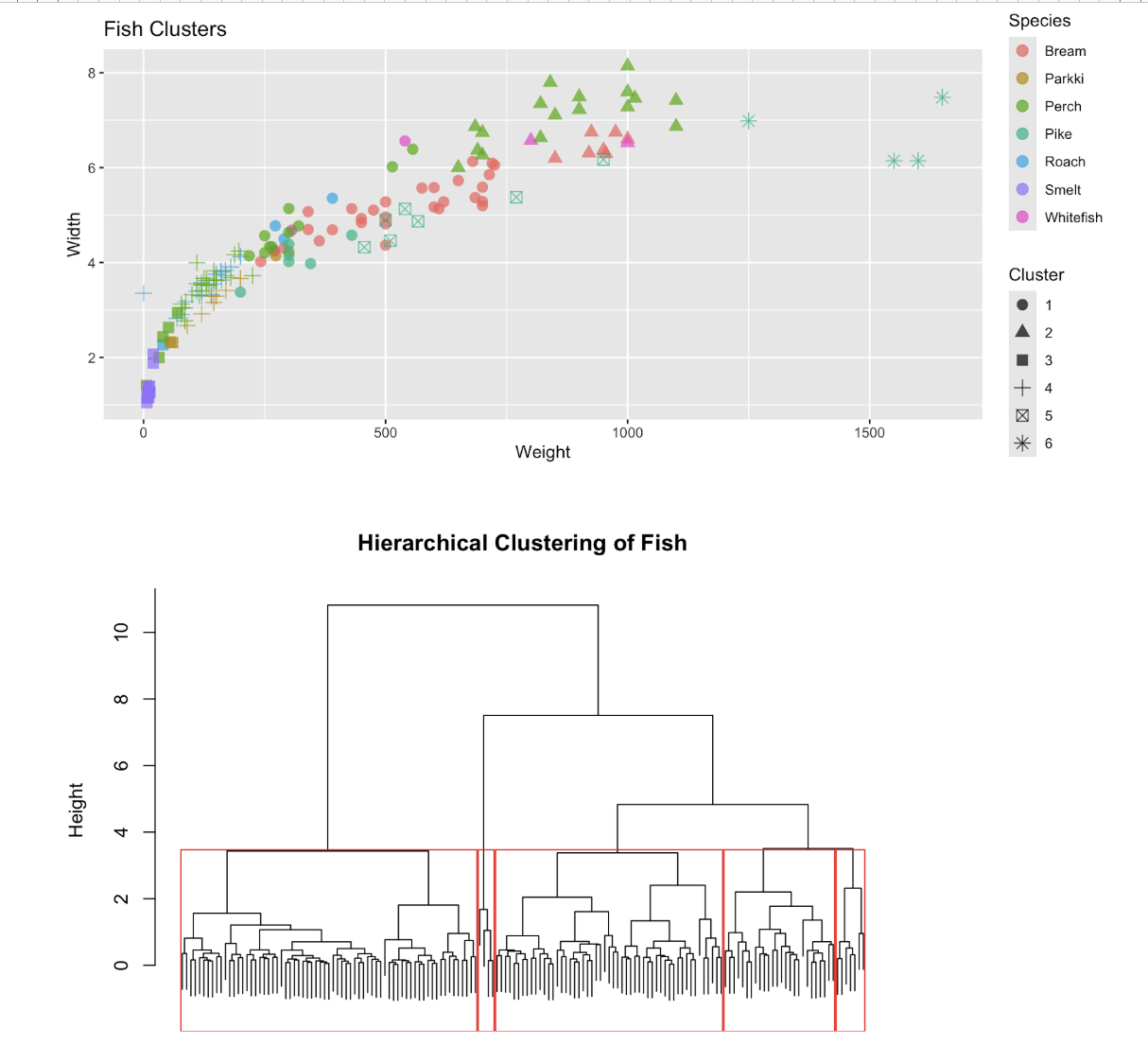
This project explored how hierarchical clustering can be used to identify patterns in biological data using R. After learning the technique with a fish dataset, we applied it to the Palmer Penguins dataset to group penguins based on physical characteristics such as bill length, flipper length, and body mass. Using dendrograms and scatterplots, we visualized the clusters and compared them with the known penguin species. This project shows how unsupervised machine learning can reveal natural patterns in data without relying on predefined labels. Read more about it here.
Spring 2026
This project used hierarchical clustering in R to compare two biological datasets: fish measurements and the Palmer Penguins dataset. By cleaning, scaling, and analyzing the data, we explored how physical characteristics influence the way observations are grouped. Visualizations such as dendrograms and scatterplots helped reveal which features best distinguished different species and how clustering can be used to interpret relationships within complex datasets. Read more about it here.

Fall 2025
This project explored unsupervised learning through hierarchical clustering in R using the Palmer Penguins dataset to uncover natural patterns in biological data without predefined labels. By adapting clustering methods from a Fish dataset, we strengthened our understanding of hierarchical clustering techniques while learning to interpret species-level and habitat-related patterns from quantitative data. Read more here
Fall 2025
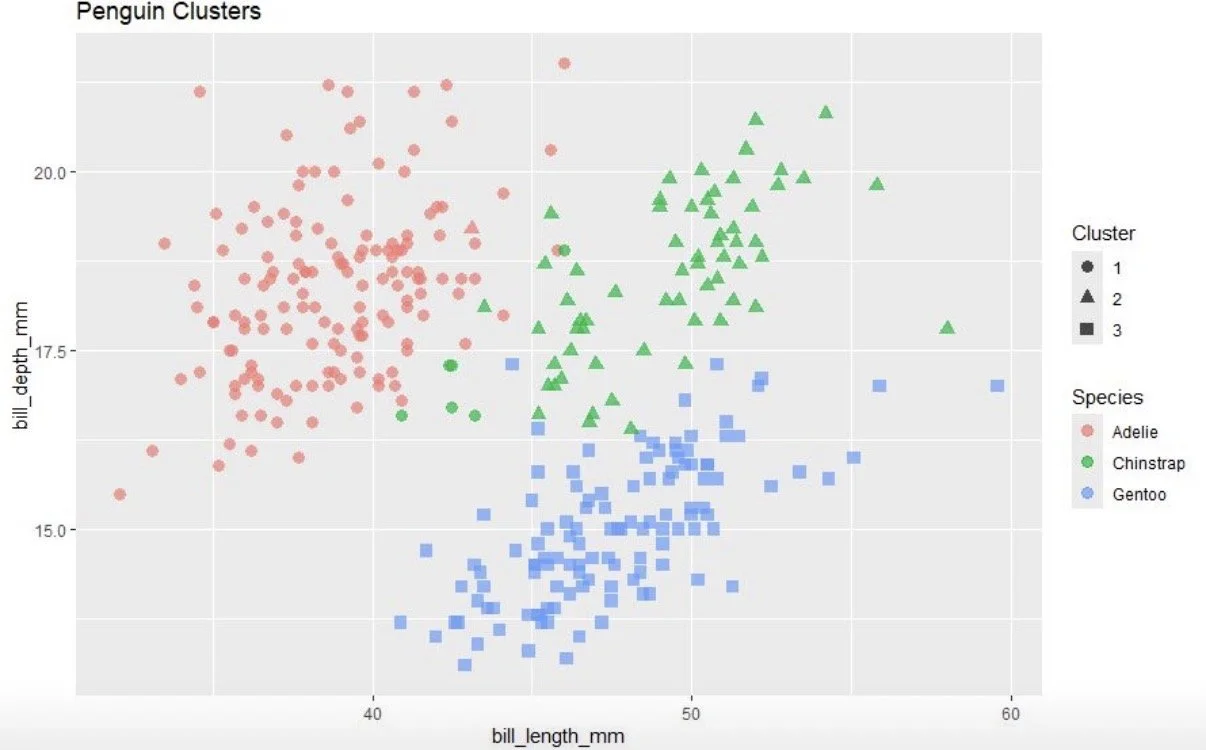
This project applied unsupervised learning with hierarchical clustering in R to analyze the Palmer Penguins dataset and uncover natural patterns in penguin species based on physical traits such as bill length, bill depth, flipper length, and body mass. The analysis revealed three well-defined clusters that closely aligned with Adelie, Gentoo, and Chinstrap species, demonstrating how computational methods can effectively identify biological patterns without prior labels. Read more here